
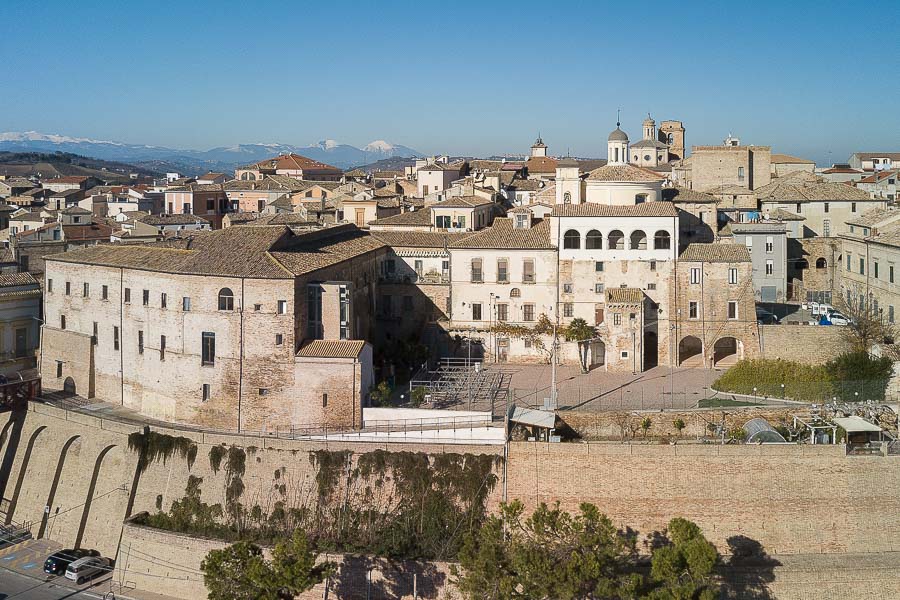
ex Convento di Santa Chiara o delle Clarisse
La chiesa di Santa Chiara a Città Sant’Angelo è annessa al convento delle Clarisse costruito in seguito ad una Bolla di Papa Innocenzo IV del 1357. Le notizie relative alla chiesa di Santa Chiara sono strettamente collegate alla presenza delle clarisse nel territorio di Città Sant’Angelo, attestata fin dal Trecento.
Intorno alla prima metà del 1500 la Duchessa di Nocera e Marchesa di Città Sant’Angelo, Giovanna Castriota Scandeberg Carafa per la fondazione della casa della Compagnia (Gesuiti) da aprire a Città Sant’Angelo s’impegna a finanziare l’opera. Venuto meno l’impegno economico da parte della nobildonna i Gesuiti abbandonano il paese pochi anni dopo.
Nel Monastero di Santa Chiara è istituito, nel 1866, un educandato per fanciulle con tanto di inaugurazione avvenuta il 9 novembre di quell’anno. Nel 1900, per mancanza di alunne iscritte, viene n soppresso e trasformato in scuole elementari femminili.
L’antico edificio dell’ex convento delle Clarisse, nel periodo 1941/1944, è utilizzato dal fascismo come campo d’internamento per oppositori politici e per perseguitati a causa della propria nazionalità o fede religiosa. Ma la popolazione angolana si distingue per generosità esponendosi alle ritorsioni delle truppe nazifasciste accogliendo sfollati, ex internati e fuggiaschi, nelle proprie case e dando loro aiuto. Per questo il Presidente della Repubblica Giorgio Napolitano nel 2012 ha conferito alla cittadinanza la Medaglia d’argento al Merito Civile.
Nei primi anni Cinquanta si afferma la coltivazione e la lavorazione del tabacco di cui Città Sant’Angelo è tra i maggiori produttori. Un’epoca d’oro per il tabacchificio, la cui materia arriva copiosa dai contadini dalle pianure e dalle colline circostanti. Molto attiva, in questo sito, anche l’attività legata alla trasformazione della lana con l’occupazione di diverse maestranze.
Negli ultimi anni, per la precisione dal 1995, il luogo è stato trasformato in museo laboratorio d’arte contemporanea con esatta denominazione “ex manifattura tabacchi”. Il museo è stato istituito con deliberazione del consiglio comunale n. 25 del 25 marzo 1998, ottenendo in data 24 settembre 2003 il riconoscimento di classificazione alla IV categoria da parte del Comitato Tecnico Scientifico per i Beni Museali della Regione Abruzzo.
Oggi questo prestigioso edificio ospita un asilo-nido comunale e il museo civico.
The church of Santa Chiara in Città Sant’Angelo is annexed to the convent of the Poor Clares built following a Bull of Pope Innocent IV of 1357. The information relating to the church of Santa Chiara is closely linked to the presence of the Poor Clares in the territory of Città Sant’Angelo Angelo, attested since the fourteenth century.
Around the first half of the 1500s, the Duchess of Nocera and Marchioness of Città Sant’Angelo, Giovanna Castriota Scandeberg Carafa undertook to finance the work for the foundation of the house of the Company (Jesuits) to be opened in Città Sant’Angelo. When the economic commitment on the part of the noblewoman failed, the Jesuits left the country a few years later.
In the Monastery of Santa Chiara, in 1866, a boarding school for girls was established, complete with its inauguration on 9 November of that year. In 1900, due to lack of enrolled students, it was abolished and transformed into elementary schools for girls.
The ancient building of the former convent of the Poor Clares, in the period 1941/1944, was used by fascism as an internment camp for political opponents and for those persecuted because of their nationality or religious faith. But the Angolan population stands out for its generosity, exposing itself to the retaliation of the Nazi-fascist troops by welcoming displaced persons, former
internees and fugitives into their homes and giving them help. For this reason, the President of the Republic Giorgio Napolitano in 2012 awarded the citizens with the Silver Medal of Civil Merit.
In the early 1950s, the cultivation and processing of tobacco established itself, of which Città Sant’Angelo is one of the major producers. A golden age for the tobacco factory, whose material comes in abundance from farmers from the surrounding plains and hills. The activity linked to the transformation of wool is also very active on this site with the employment of various workers.
In recent years, since 1995 to be precise, the place has been transformed into a museum laboratory of contemporary art with the exact name “ex tobacco factory”. The museum was established by resolution of the municipal council n. 25 of 25 March 1998, obtaining on 24 September 2003 the recognition of classification in the IV category by the Technical-Scientific Committee for Museum Heritage of the Abruzzo Region.
Today this prestigious building houses a municipal nursery school and the civic museum.